Cabinet Materials Guide for Lakeland Homes
What cabinets are made of matters more than the door color. This guide explains boxes, doors, wood species, finishes, drawers and hardware, and what holds up in a humid Central Florida home.
No obligation. Phone answered 24/7.
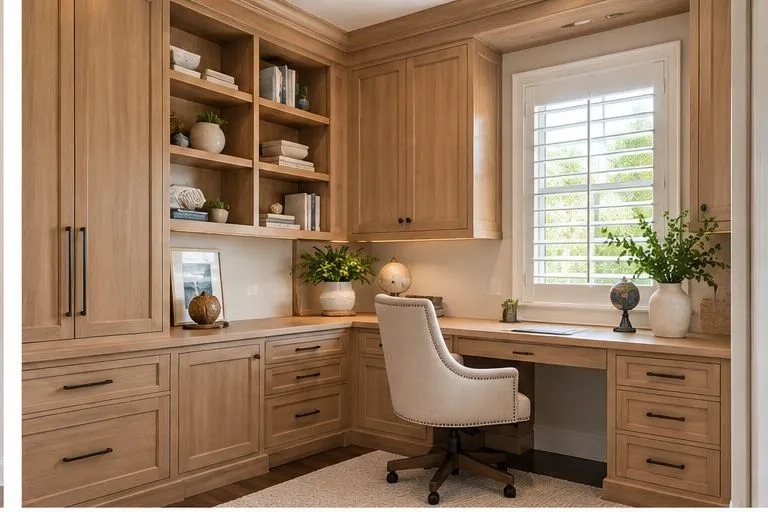
Start with the cabinet box
The box, also called the carcass, is the part you don't see. It carries the weight of dishes and countertops and sits closest to sink leaks. Box material is the most important quality question to ask.
| Box material | Strengths | Watch for |
|---|---|---|
| Plywood | Strong, holds screws well, handles humidity and small leaks best | Costs more; quality varies by grade and number of plies |
| MDF (medium-density fiberboard) | Smooth, stable, good for painted parts | Heavy; swells if water gets past the finish |
| Particleboard with laminate | Lowest cost, flat and consistent | Swells and crumbles when wet; weak at screws and hinges |
For Lakeland homes, plywood boxes are worth it under sinks, in bathrooms and in laundry rooms. Particleboard can be fine for dry upper cabinets if the edges are fully sealed.
Door and drawer front styles
- Shaker: a flat center panel with a square frame. The most popular style in both older bungalows and new builds.
- Raised panel: a shaped center panel. Common in 1990s oak kitchens and traditional rooms.
- Slab: one flat piece with no frame. Clean and modern, and easy to wipe down.
- Inset: doors set inside the face frame. A classic look that suits historic Lakeland homes but costs more to build and fit.
- Glass-front: for display cabinets and hutches.
Painted doors are often made with MDF center panels, because solid wood panels expand and contract with humidity and can crack the paint at the joints.
Common wood species
| Species | Look | Good to know |
|---|---|---|
| Maple | Smooth, light, fine grain | Takes paint and light stains well; the most common choice for painted cabinets |
| Oak (red or white) | Strong open grain | Very durable; white oak is popular again in natural finishes |
| Cherry | Warm red-brown that deepens over time | Darkens with sunlight; a premium choice |
| Hickory | Bold grain and color variation | Very hard and rustic in look |
| Alder | Soft, even grain | Takes stain evenly; dents more easily |
| Walnut | Rich dark brown | Premium cost; usually used for accents or islands |
Finishes
Factory or shop-sprayed finishes such as catalyzed lacquer or conversion varnish are harder and more even than paint brushed on site. Ask what finish the shop uses and whether it's applied in a spray booth.
Stain shows the grain and hides small scratches better than paint. Paint gives a solid color but shows chips at edges. In humid homes, a sealed finish on all sides of a door, including the back and edges, helps keep moisture out.
Drawers and hardware
- Drawer boxes: solid wood or plywood with dovetail joints lasts longest. Stapled particleboard drawers are a sign of a budget cabinet.
- Slides: full-extension, soft-close undermount slides let you reach the back of the drawer and close quietly. Blum, Hettich and Grass are widely used brands.
- Hinges: concealed, adjustable soft-close hinges are standard on quality cabinets.
- Pulls and knobs: D-shaped or bar pulls are easier to grip than small knobs.
What holds up in Central Florida
Polk County homes deal with long humid summers and, in many ranch houses, laundry rooms in an unconditioned garage. A few choices make the biggest difference:
- Plywood boxes at the sink, in bathrooms and in the laundry room
- Edge-banded or sealed edges everywhere
- MDF center panels for painted doors
- Moisture-resistant materials and hardware for garage cabinets (see garage cabinets)
- A leak check and subfloor repair before new cabinets go in
Questions to ask about materials
- What are the boxes, shelves and drawer boxes made of?
- How thick are the box sides and backs?
- Is the finish sprayed in a shop, and what type is it?
- What brand are the hinges and drawer slides, and are they soft-close?
- What does the warranty cover, and for how long?
Get the answers in writing on your estimate so you can compare bids. See what custom cabinets cost and our services.
Cabinet materials questions
Is plywood really better than particleboard for cabinets?
For anything near water, yes. Plywood holds screws better and resists swelling when a sink leaks. Good particleboard with sealed edges can be fine for dry upper cabinets.
What wood is best for painted cabinets?
Maple is the most common choice because of its smooth, tight grain. Many painted doors use an MDF center panel to avoid cracks at the joints in humid weather.
Can new cabinets match the wood in my older Lakeland home?
Often, yes. Bring a door, trim sample or photo to the cabinetmaker. Matching old finishes may take test samples.
What hardware should I ask for?
Concealed soft-close hinges and full-extension soft-close drawer slides from an established brand such as Blum, Hettich or Grass.
Ready to choose materials?
A local cabinetmaker can bring samples and recommend what suits your room. No obligation.
No obligation. Phone answered 24/7.